
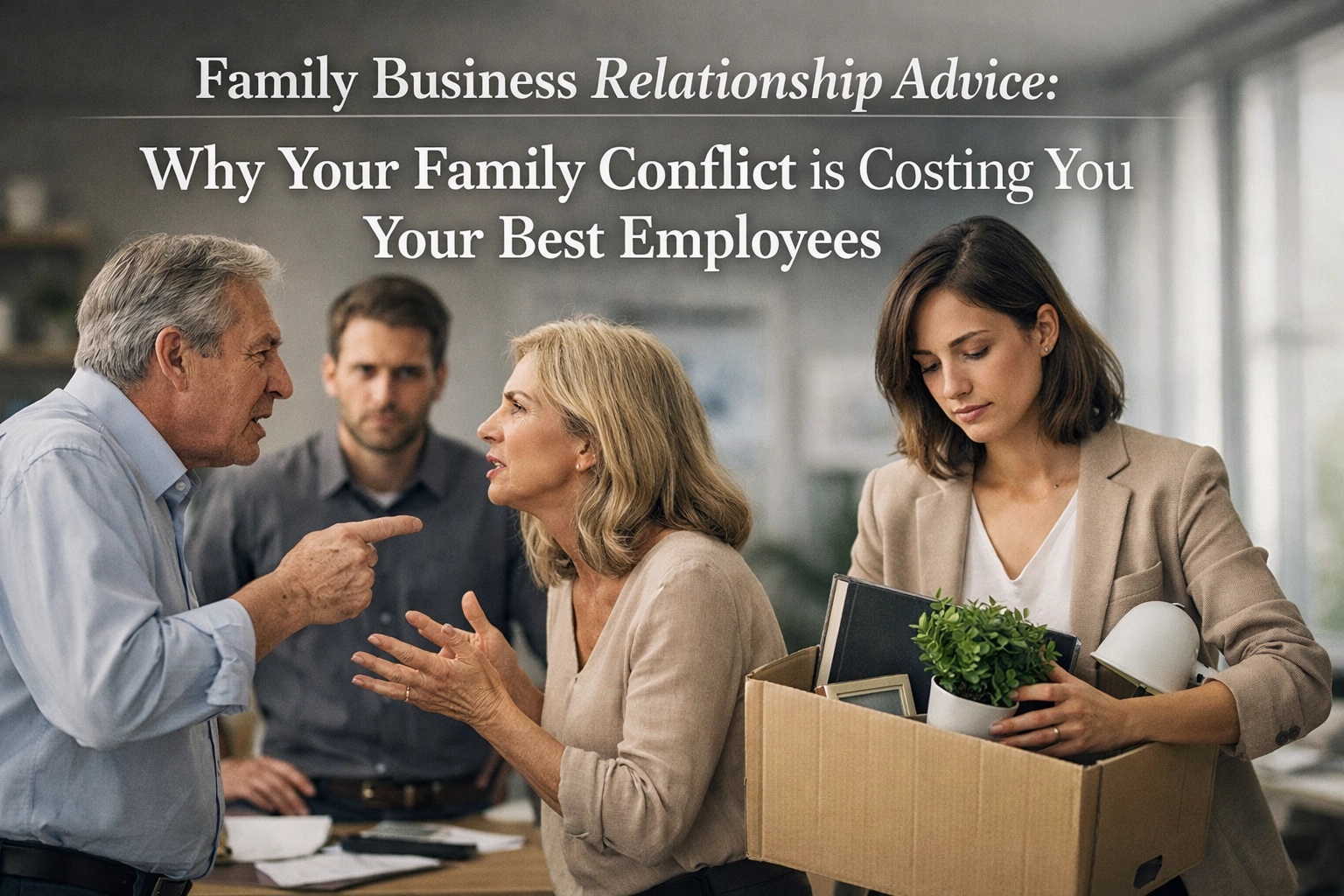
Running a family company is a unique challenge that blends deep love with high-stakes professional pressure. When things go well, it feels like a dream. But when internal friction starts to boil over, searching for family business consulting becomes more than just a personal need: it becomes a survival tactic for your company. Struggling with staff turnover? Our family business consulting helps you solve retention problems by ending internal conflict and toxic dynamics. At Bridge Builders PC, we see it every day: brilliant families building incredible legacies, only to watch their best non-family employees walk out the door because the “family drama” simply becomes too much to bear.
We understand the weight you are carrying. It is exhausting to play the role of CEO, sibling, and child all in the same afternoon. You aren’t just managing a balance sheet; you are managing decades of history, shared holiday memories, and perhaps a few long-standing grudges. If your top talent is starting to look for the exit, it isn’t necessarily because of the pay or the perks. It’s often because they are caught in the crossfire of a family dynamic they didn’t sign up for.
Family Business Consulting: The Invisible Tax of Family Conflict
When a father, a daughter, and a son are out of sync at the leadership level, the entire office feels it. It’s like a low-frequency hum that eventually turns into a headache. Your non-family employees are experts at reading the room. They see the eye-rolls in the boardroom. They hear the tone of voice used in the hallway. They sense when a decision was made based on a Sunday dinner argument rather than a strategic goals meeting.
This creates an environment of uncertainty. Your best people: the high performers who have options: crave stability and clarity. When they perceive that “family stuff” is driving the ship, they lose trust. They start to feel like outsiders in a private war. This is where the cost of conflict becomes real: in the loss of institutional knowledge and the high expense of turnover.

Practical Family Business Consulting for Modern Leaders
To keep your best people, you have to bridge the gap between “family” and “business.” This requires more than just a standard HR policy. It requires a fundamental shift in how you relate to one another as leaders. Our family business consulting centers on moving from a reactive state to an intentional one.
One of the biggest threats to employee morale is the perception of preferential treatment. If a family member gets a pass on a deadline while a non-family manager is held to the fire, the culture begins to rot. Transparency is the antidote. When leadership is transparent and accountable, the “us vs. them” mentality between family and non-family staff begins to dissolve.
Sound familiar? Maybe you’ve noticed that your star manager hasn’t been as vocal in meetings lately. Or perhaps your HR lead is spending more time mediating family squabbles than recruiting new talent. These are red flags that your internal dynamics are leaking into the workplace culture.
The Brain Science of the “Toxic Triangle”
At Bridge Builders PC, we focus heavily on the brain science behind how we interact. When family members are in conflict, our brains often enter “survival mode.” This is what we call an “Amygdala Hijack.” In this state, the prefrontal cortex: the part of the brain responsible for logic, empathy, and long-term planning: effectively goes “offline.”
When you are “offline,” you aren’t leading. You are reacting.
Imagine a scenario where a son feels undermined by his father in front of the staff. The son’s brain perceives this as a threat. He might shut down or lash out. The employees watching this don’t just see a business disagreement; they see a dysregulated leadership team. Their own brains then shift into a state of hyper-vigilance. They wonder, “Is my job safe? Is this company stable?” High-performing employees won’t stay in a “survival mode” culture for long. They will seek out an environment where they can feel safe, settled, and focused on growth.

Family Business Consulting: Aligning Your Leadership Style
How do we fix this? It starts with looking in the mirror. We often recommend the Partners Leadership Style Assessment as a first step. This isn’t just another personality quiz. It is a tool designed to help family members understand how their individual communication styles either clash or complement one another.
When we understand why we react the way we do, we can start to change the pattern. For example, Dad might have a “Commander” style, while the daughter has a “Collaborator” style. Without a framework to understand this, they just see each other as “stubborn” or “slow.” By using the assessment, they can learn to speak the same language. This professional alignment sends a powerful message to the rest of the team: the leaders are on the same page.
We also utilize the Rich in Relationship 360. This process provides a comprehensive view of how family dynamics are impacting the broader organization. It allows us to move away from blaming individuals and toward solving systemic patterns. This is the gold standard of family business consulting because it addresses the root cause rather than just the symptoms.
Reframing the Conversation: From Conflict to Connection
Communication is the bridge that connects family values to business success. Instead of letting old wounds dictate current conversations, we encourage our clients to use specific, solution-focused language.
Contrast these two approaches:
- The Conflict Approach: “You always undermine my authority in front of the managers! You’re doing exactly what you did when I was a kid.”
- The Bridge Builders Approach: “I noticed that when we disagreed in the meeting, the team seemed to tense up. How can we ensure we present a united front next time, even when we have different perspectives?”
The second approach is active, non-blaming, and focused on the health of the business. It acknowledges the feeling without getting lost in the history. This is how you build a culture that top talent wants to be a part of. They see leaders who can handle disagreement with maturity and grace.

Why Your Employees Want You to Succeed
Your non-family employees actually want the family to get along. They joined your company because they likely valued the “family feel”: the sense of belonging and the shared mission. When you invest in family business consulting, you aren’t just helping your relatives; you are honoring the commitment your employees have made to your vision.
When employees understand how their specific role impacts the company’s mission, they are much more likely to stay, even if a competitor offers a slightly higher salary. However, they can only see that mission clearly if the family isn’t blocking the view with constant friction. By cleaning up the internal dynamics, you create a “clear window” through which your team can see the future.
Next Steps for Your Family Business
If you are tired of the tension and worried about losing your best people, it is time to take action. You don’t have to figure this out alone. We have helped countless families move from chaos to clarity.
Here are three things you can do today:
- Acknowledge the Ripple Effect: Take a moment to observe your staff during a family meeting. Are they leaning in, or are they checking out?
- Schedule a “Business-Only” Briefing: Commit to one meeting a week where family history is left at the door and only business strategy is discussed.
- Explore Professional Support: Look into the Partners Leadership Style Assessment to see how your styles are interacting.
At Bridge Builders PC, we believe that your family business can be your greatest source of joy, not your greatest source of stress. By applying intentional family business consulting and focusing on brain-based communication, you can stop the talent drain and start building a legacy that lasts for generations.
Let’s get your leadership team back “online.” Your employees: and your family: deserve it. Reach out to us today to learn more about how our Alternative Dispute Resolution services and coaching can transform your workplace culture.